COUNT
Unifying global energy portfolios through a scalable digital infrastructure
Role: Lead UX Designer
Client: COUNT Group
Year: 2024
Visit: countgroup.com
summary
The Problem
COUNT Group operated as three disconnected entities (trading, distribution, and gas) with siloed digital identities. This fragmentation diluted brand authority, obscured the company’s $1.5B scale, and created friction for institutional investors and partners who couldn't see the master vision of their energy transition strategy.
The Mission
My role was to architect a unified digital ecosystem that consolidated three distinct business units into a single high-authority powerhouse, moving from a house-of-brands to a branded house. The goal was to build a scalable, component-based infrastructure that would facilitate future acquisitions, prove ESG compliance and position the group as a credible leader in the global move toward sustainable petrochemicals.
The Outcome
I consolidated three disconnected entities into a single, high-authority powerhouse, instantly transferring decades of market trust to newly acquired units. By implementing a modular component library, I reduced time-to-market for new service launches and transformed passive sustainability claims into a high-intent lead-generation engine via a CO₂ Calculator.
The challenge
A crisis of fragmentation
COUNT Group is a global leader in the petrochemical and energy industry. Following a period of rapid growth and the strategic acquisition of Westgass, the organisation faced a fragmentation problem.
They were operating as three distinct entities (trading, distribution, and gas), each with its own siloed identity and disconnected website. This lack of unity made it difficult to communicate the group's true scale and its mission to lead a sustainable energy transition. To reach their $1.5B revenue target, they needed to move from a collection of companies to a single, high-authority powerhouse.
The Objectives:
Centralise three brands into one high-authority "Branded House."
Establish authority as a credible bridge to a sustainable petrochemical future.
Create a system that could scale with future acquisitions and new service offerings.
Lead generation: convert more visitors to leads.
The target groups
High-stakes skeptics
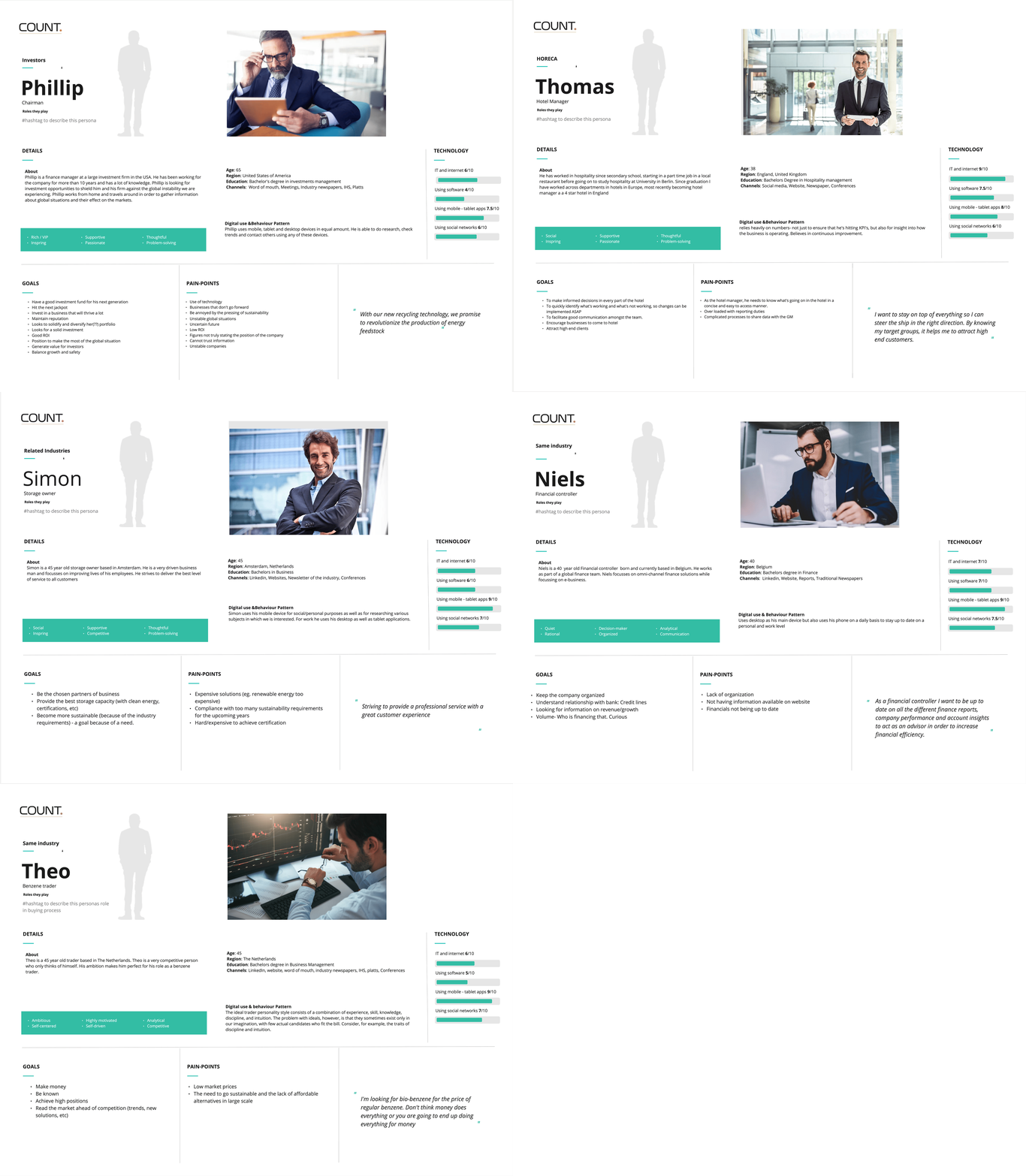
In the energy sector, users are looking for reliability, market intelligence, and transparency. I focused the UX strategy on three primary audience segments:
The industry traders (40% of traffic): they prioritise speed and market edge. They need to see institutional "muscle" (trading volumes and global logistics) to trust that COUNT is a reliable partner.
Sustainability & ESG managers: they are afraid of greenwashing and need deep proof, such as certifications like ISCC and EcoVadis, embedded directly into the business flow rather than hidden on a PR page.
Investors & financial partners: they look for the master vision, and need to understand how the three entities work together to de-risk the future of the energy transition.
The strategy
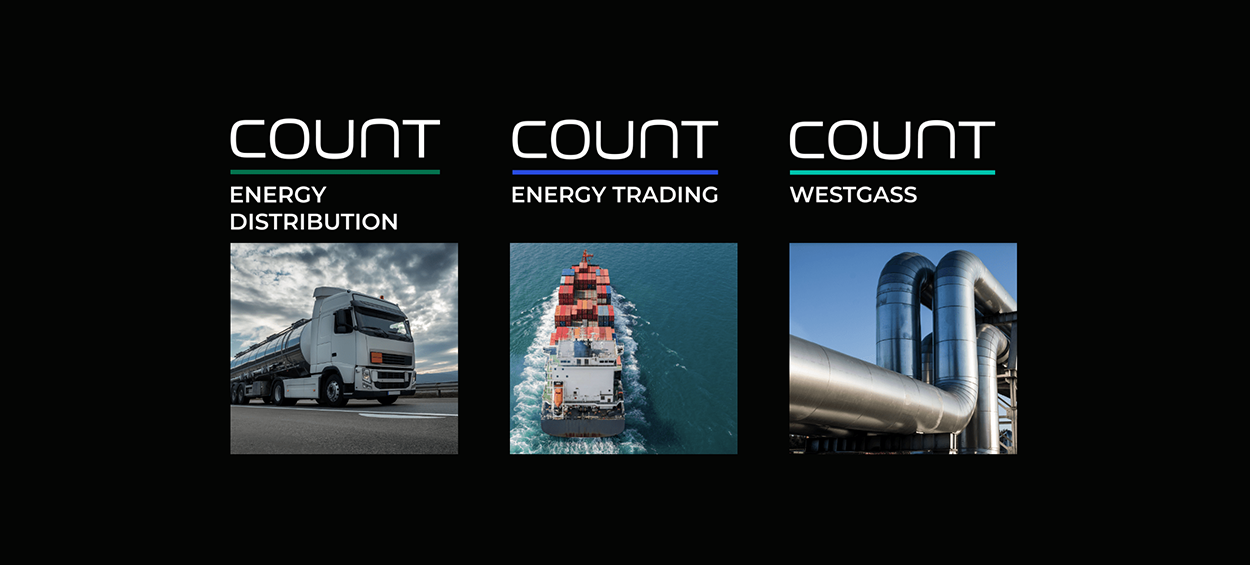
Unifying silos into a branded house
The most significant strategic decision was moving from a "House of Brands" to a Branded House.
By unifying under the COUNT Group umbrella, we funnelled the collective equity of all entities into a single domain. This allowed the newly acquired Westgass to immediately inherit the decades of trust and volume history from the parent company.
It transformed the user journey into a "one-stop-shop" experience: We trade it, we distribute it, and we provide the gas to power the process.
design for scalability
The component-based system
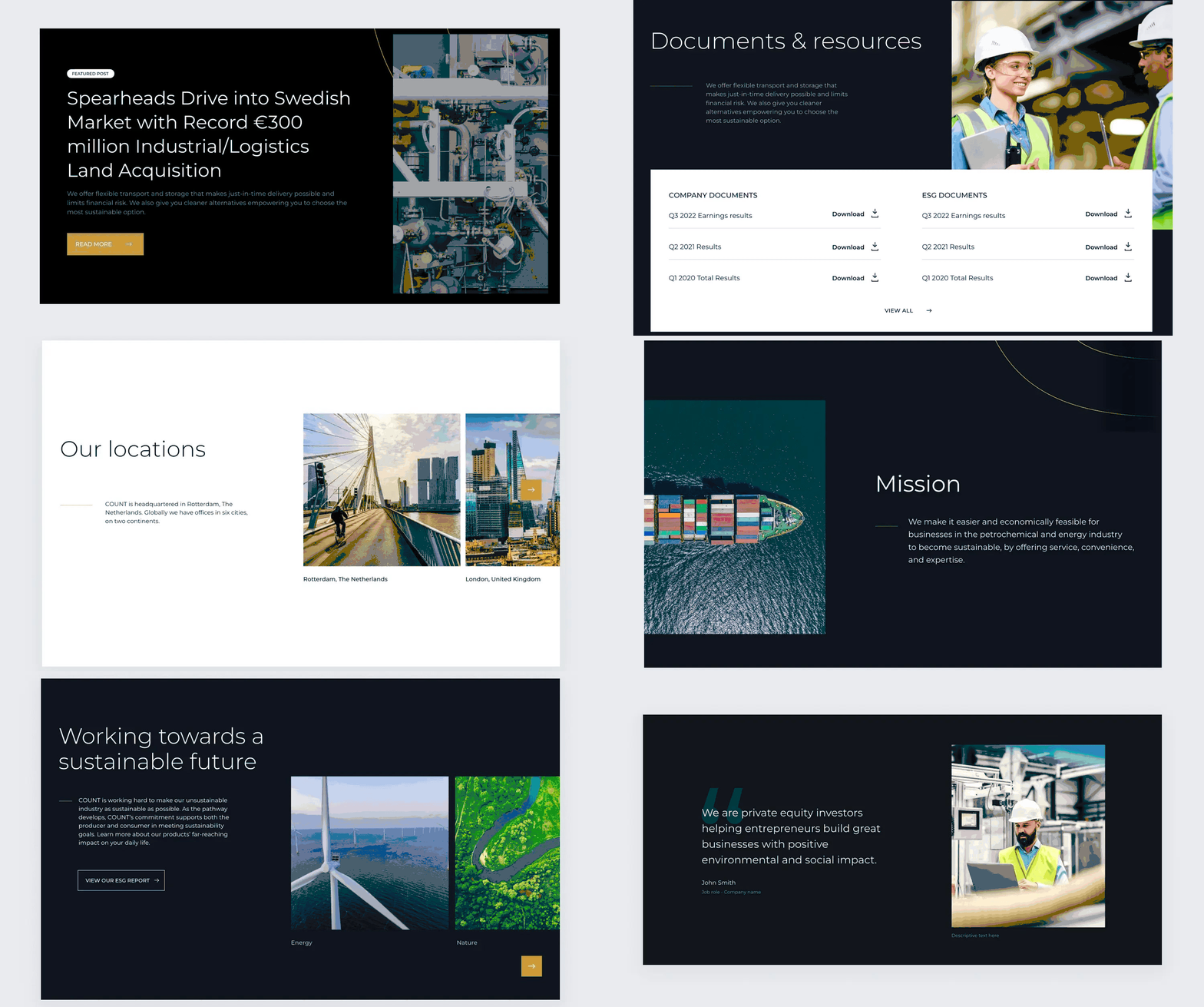
To ensure the website could grow as fast as the business, I led the creation of a modular component library.
Instead of designing static pages, we built a Lego-set of reusable UI blocks. This approach allowed the COUNT marketing team to build new pages and sections autonomously without needing a designer for every update.
Key UX details included:
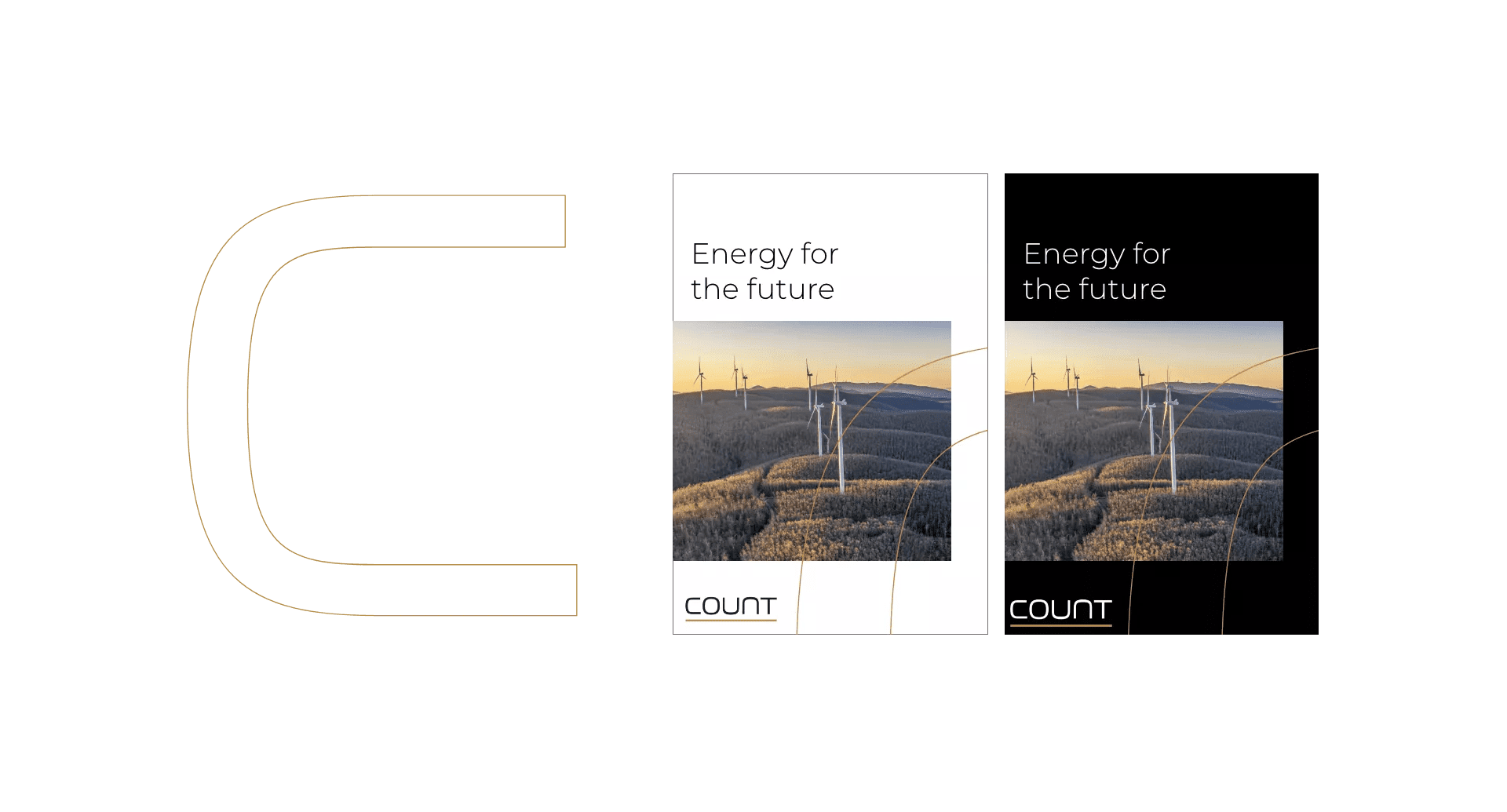
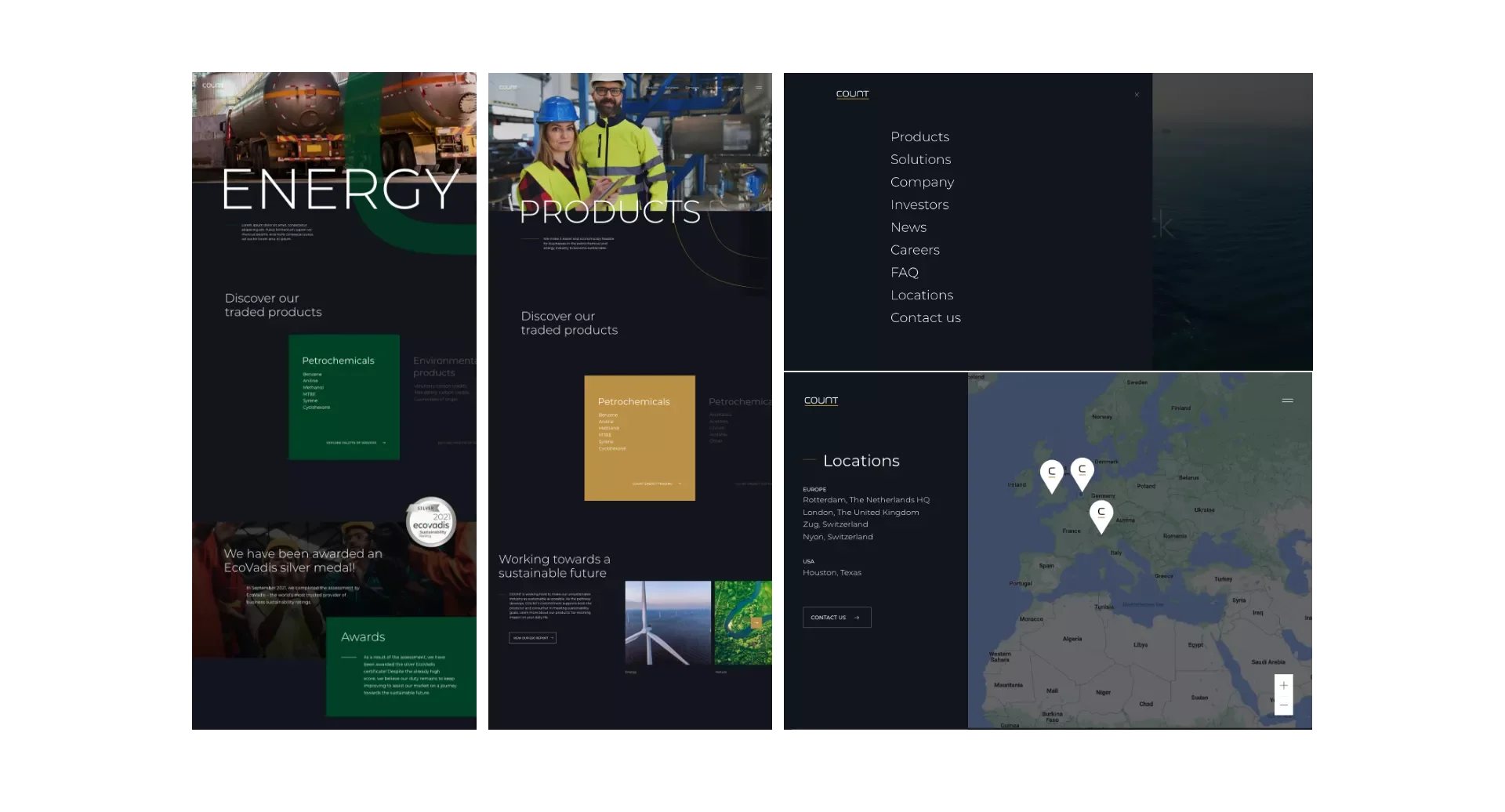
Consistent DNA: shared typography and photography across all entities to maintain group authority.
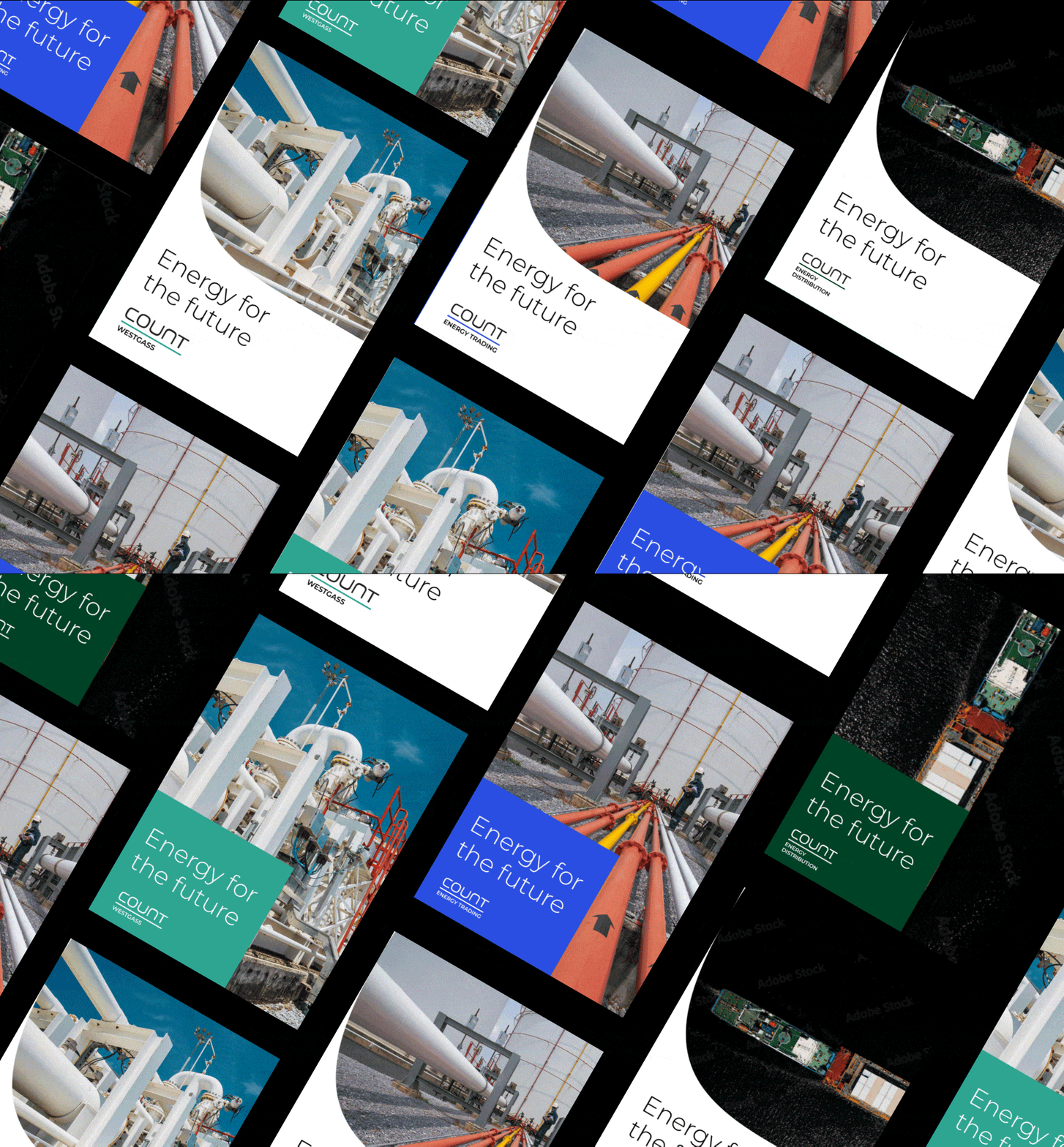
Entity wayfinding: I assigned specific colour worlds to each business unit (electric blue for trading, dark green for distribution, and turquoise for gas. This ensured that even on a unified site, users always knew exactly which department they were interacting with.
The CO₂ Calculator
Turning trust into utility
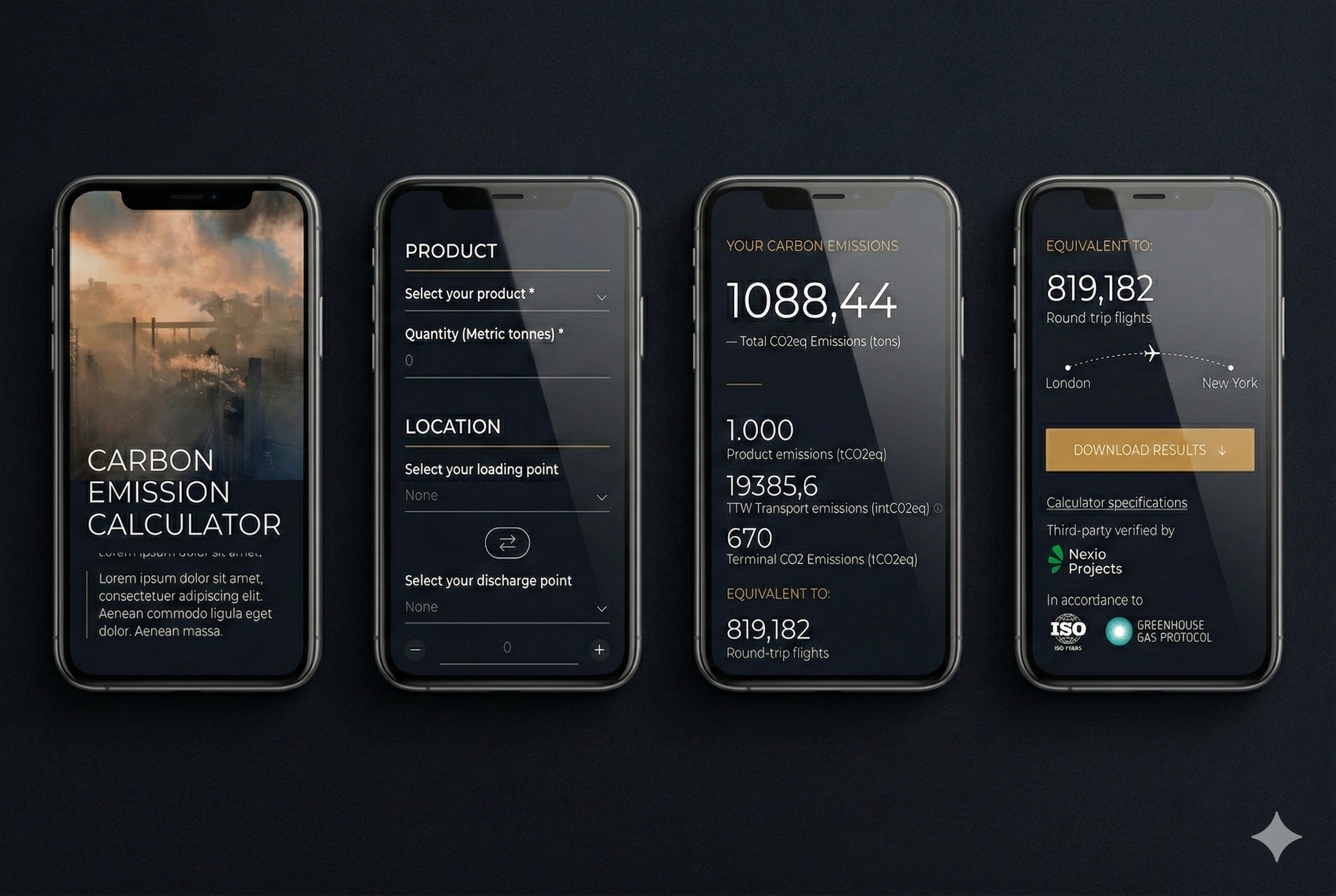
While the website served as a brand hub, the CO₂ Calculator was the tactical engine that converted passive visitors into warm leads.
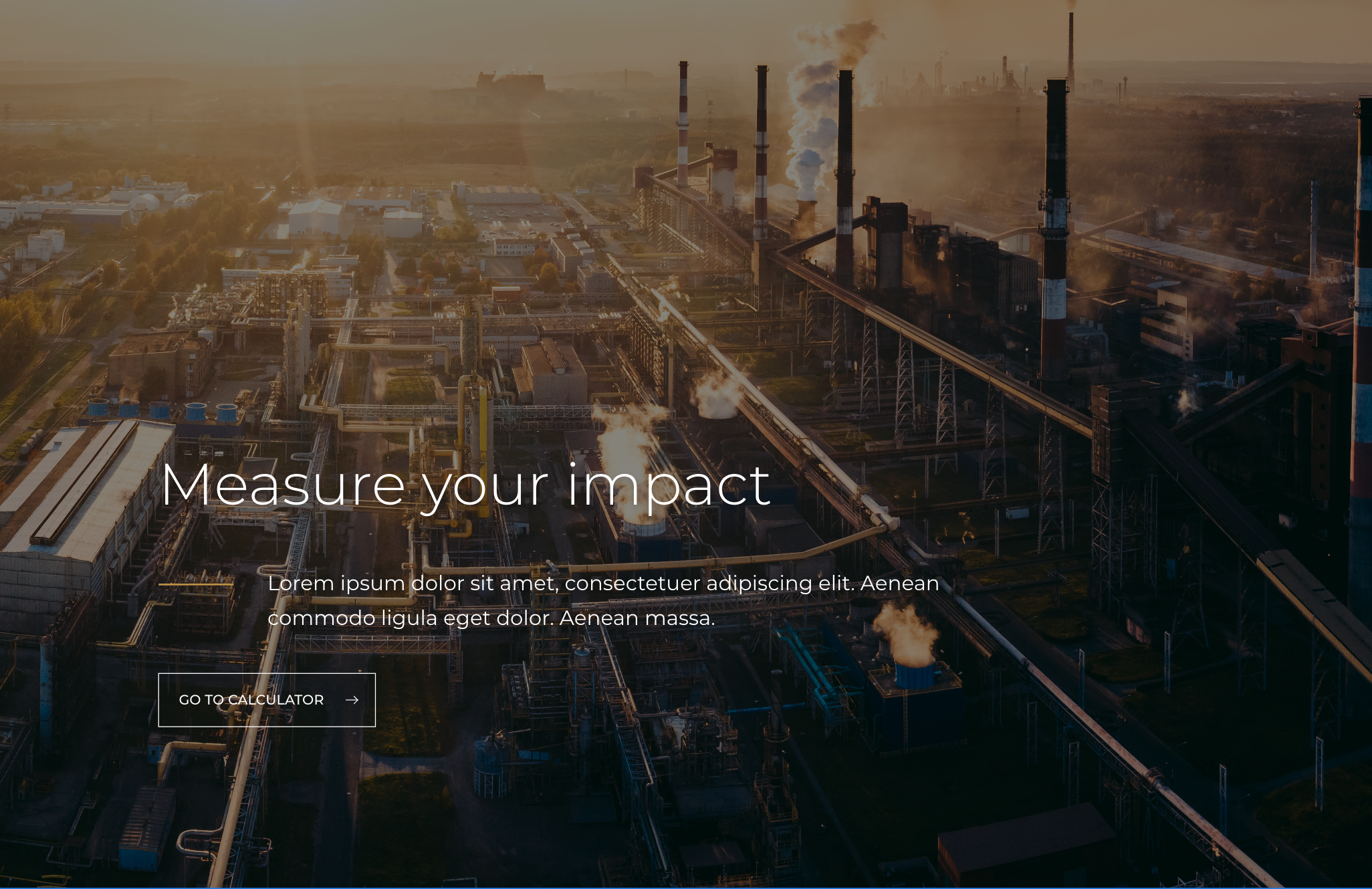
In an industry under pressure to decarbonise, we moved beyond claiming to be sustainable and started proving it through utility.
The calculator allows users to calculate carbon emissions for their specific logistics needs. By offering a "Download PDF Report" functionality, we created a low-friction lead-generation tool that identifies users who are actively looking for the sustainability expertise COUNT offers through its new consultancy arm.
REFLECTIONS
Ultimately, this transformation moved COUNT from a fragmented trading firm to a modern energy leader. By unifying three separate entities under one cohesive visual system, we created the kind of "institutional gravity" that accurately reflects their $1.5B scale and directly strengthens trust with banks and investors.
For me, the biggest win was seeing the systems-thinking pay off. Because we built a robust, component-based architecture, the business was able to launch its new ESG arm—COUNT Consultancy—in record time.
Furthermore, introducing the interactive CO₂ calculator shifted the entire brand narrative. It proved that good design isn't just about marketing; it’s about providing utility and positioning the business as a practical partner in the energy transition.