brandstoryteller.ai
Create on-brand content faster and consistently.
Role: Senior UX strategy & product design
Client: Blijdorp Zoo & DPDK
Outcome: Production AI content platform
summary
The Problem
Blijdorp had a wealth of scientific data but a lean marketing team. As they tried to reach six different audiences, their message began to dilute. Maintaining scientific accuracy while personalising content became an impossible manual burden, leading to inconsistent messaging and "one-size-fits-all" content that failed to convert. The deeper issue was that the more they tried to scale, the more fragmented the messaging became.
The Mission
To move beyond generic AI prompting by building a "living brand memory" that the team could use to generate on-brand content consistently.
The Outcome
The marketing team stopped writing from scratch. They now review and sharpen near-ready drafts — the work shifted from production to strategy.
The agency relationship changed. DPDK moved from service provider to platform partner - Blijdorp's brand strategy is now embedded in the software they use daily.
The system gets smarter over time. We're now building a feedback loop where human edits train the model to eliminate recurring mistakes — turning every correction into a permanent improvement.
The context
A brand drowning in its own data
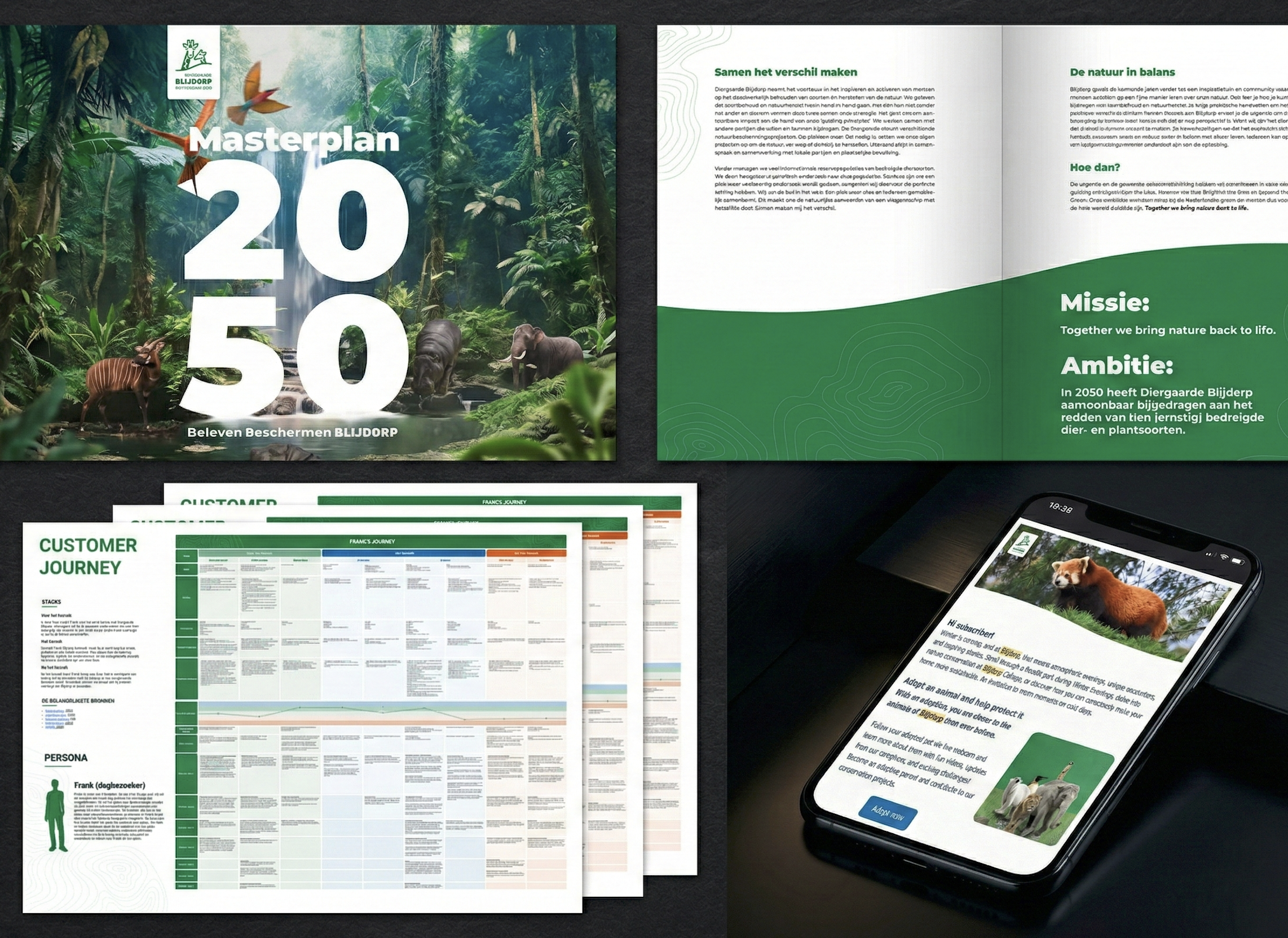
Blijdorp, a leader in nature conservation and wildlife education, faced a classic scaling paradox. They had a wealth of scientific data and strategic goals, but a lean marketing team tasked with communicating across six distinct audience segments.
The manual burden of maintaining scientific accuracy while personalising content led to:
High Subscriber Churn: Generic content failed to resonate with niche segments.
Operational Bottlenecks: Drafting multi-segment newsletters took days of cross-referencing PDFs and "Master Plans."
Brand Dilution: Fragmented silos led to inconsistent messaging across channels.

The vision
Beyond the “Magic Box”
Most AI writing tools are generic; they lack a "memory" of the brand. Our goal was to build a client knowledge repository - a tool that doesn’t just generate text, but one that makes the brand’s DNA operational.
The UX Philosophy:
Human command: AI handles the heavy lifting, but the human remains the final authority.
Context over generation: the "Brain" (brand memory) matters more than the "Pen" (the AI).
Modular architecture: we don’t generate static documents; we architect narrative blocks.
The strategy
Intentional fricton
Early testing showed that a "One-Click" generation button was a disaster. In a scientific context, an AI hallucination is a threat to the institution's credibility.
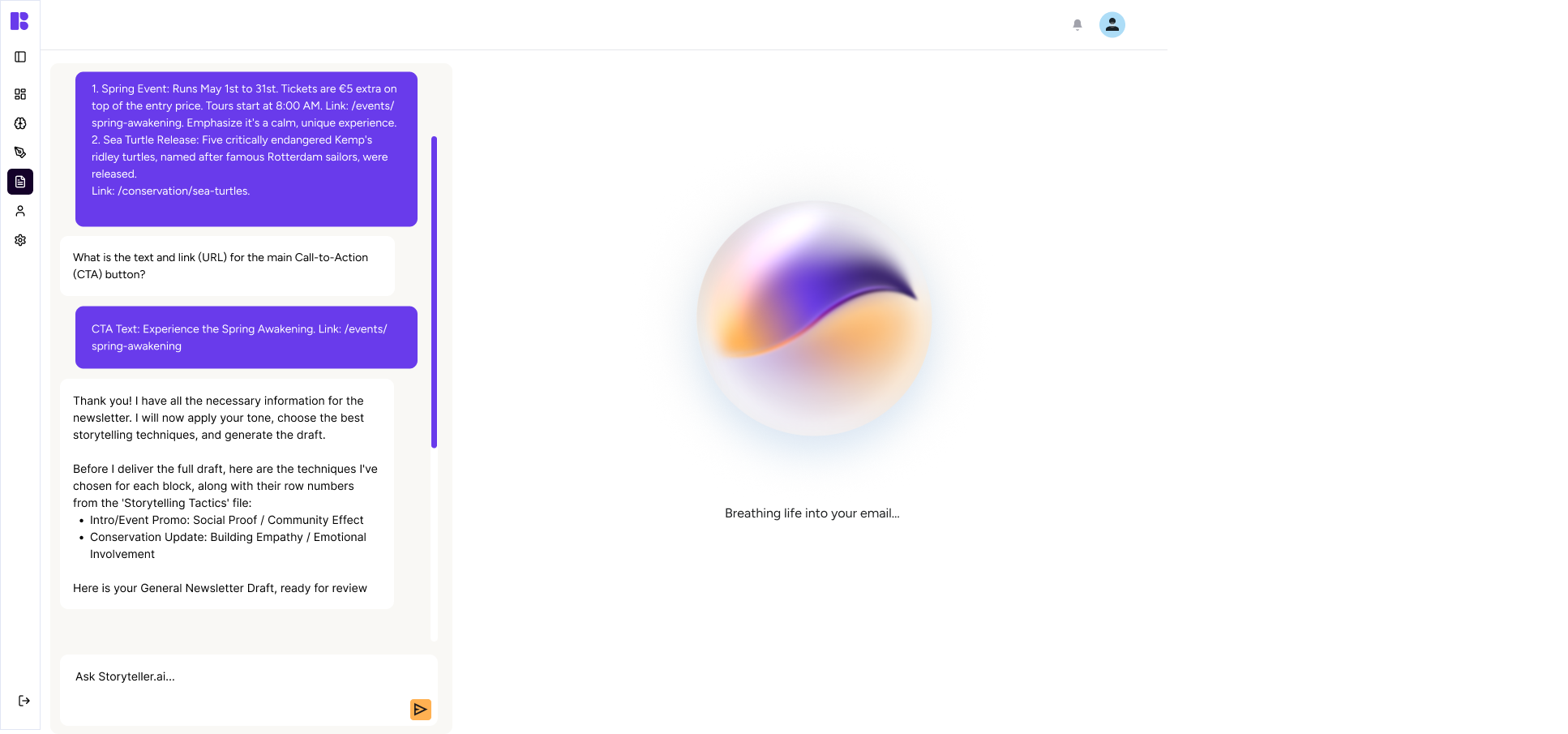
The Solution: The structured inquiry flow. I replaced the blank prompt with a strategic dialogue. I designed an "If-This-Then-That" flow that forces the user to become a strategist before becoming a writer. The system asks:
Who is the audience? (Determining the segment)
What is the goal? (Defining the objective)
Which tactic applies? (Choosing storytelling frameworks like "Social Proof" or "Hero’s journey")
The Result: We traded a few seconds of speed for a lifetime of trust. By the time the AI starts writing, it’s already 90% aligned with the strategy.
The product
Granular governance
Most AI tools treat a newsletter like a single block of text. I designed BrandStoryteller to treat a newsletter like a dynamic system. It starts with a global Strategy and ends with granular control.
The Memory-Driven Setup
Instead of a generic prompt, the system initiates a global conversation. Because the engine has a built-in memory of Blijdorp’s content structures, it knows the difference between a "General Newsletter" and a "Member Newsletter."
Relevant inquiry: the system only asks questions that matter for the chosen format.
The logic: if the user selects a "Member" track, the UI automatically pivots to ask about conservation milestones rather than tourist ticket prices. We eliminated the noise so the marketer can focus on the signal.
Block-Level Intelligence
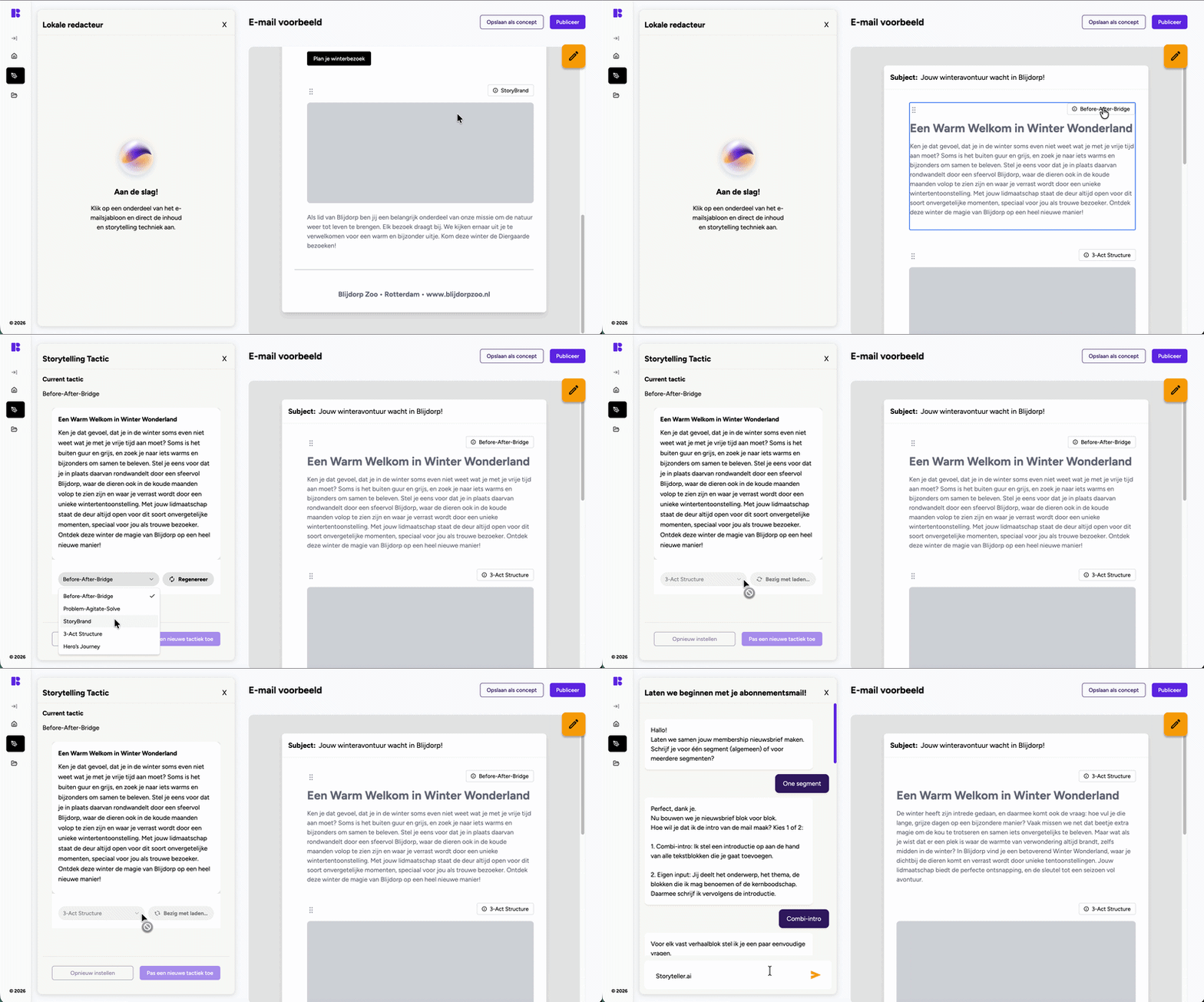
Once the strategy is set, the system generates the content as a series of independent modules.
Narrative architecture: We don't just "write" a draft; we assemble it. Every section—from the lead story to the scientific sidebar—is its own intelligent block.
Dynamic storytelling tactics: I designed the system to apply specific psychological frameworks to different blocks. For example, the first block may use a Before-and-After technique, and the user can manually change it.
Total Control
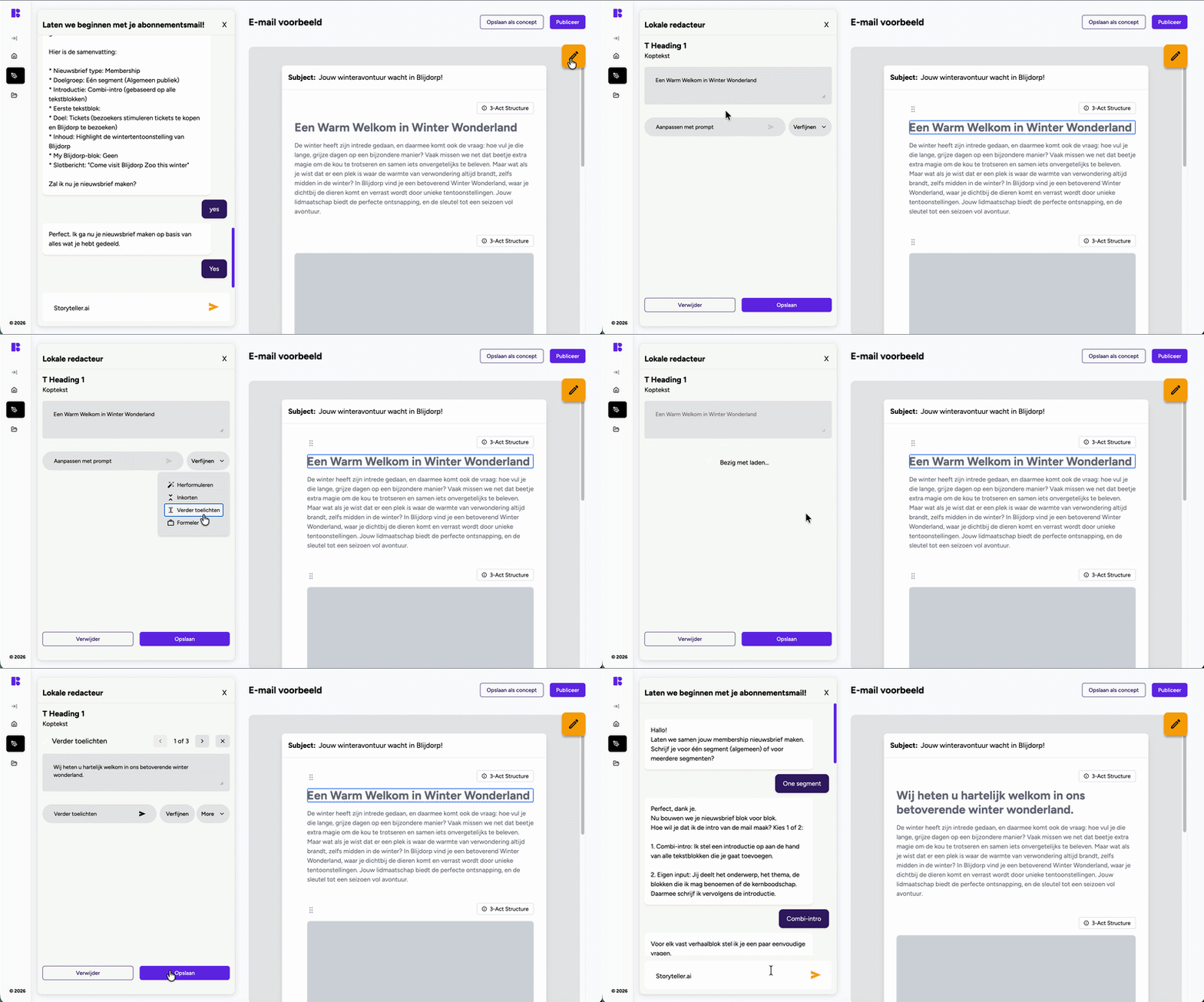
The human-in-the-loop philosophy is most visible here. Users aren't stuck with a monolithic AI draft.
Granular overrides: A user can jump into a specific block, swap the storytelling tactic (e.g., "Change this from Hero’s Journey to AIDA), and regenerate only that section.
Non-destructive editing: you can refine each block without accidentally breaking the global hook or the call to action.
The Point: It feels more like a mixing board than a typewriter. The AI handles the volume, but the human controls the mix.
The technical innovation
Building the brand DNA
To solve the generic AI problem, we implemented LoRA (Low-Rank Adaptation). I worked with the technical team to treat this not just as a piece of code, but as a UX filter.
Why it matters: It provides the Brand DNA directly into the ‘brain’ of the product by providing context. The AI doesn’t guess the Blijdorp’s tone; it remembers it. This ensures that every draft starts from a place of institutional knowledge, not a generic web scrape.
constriants
We hit an API wall
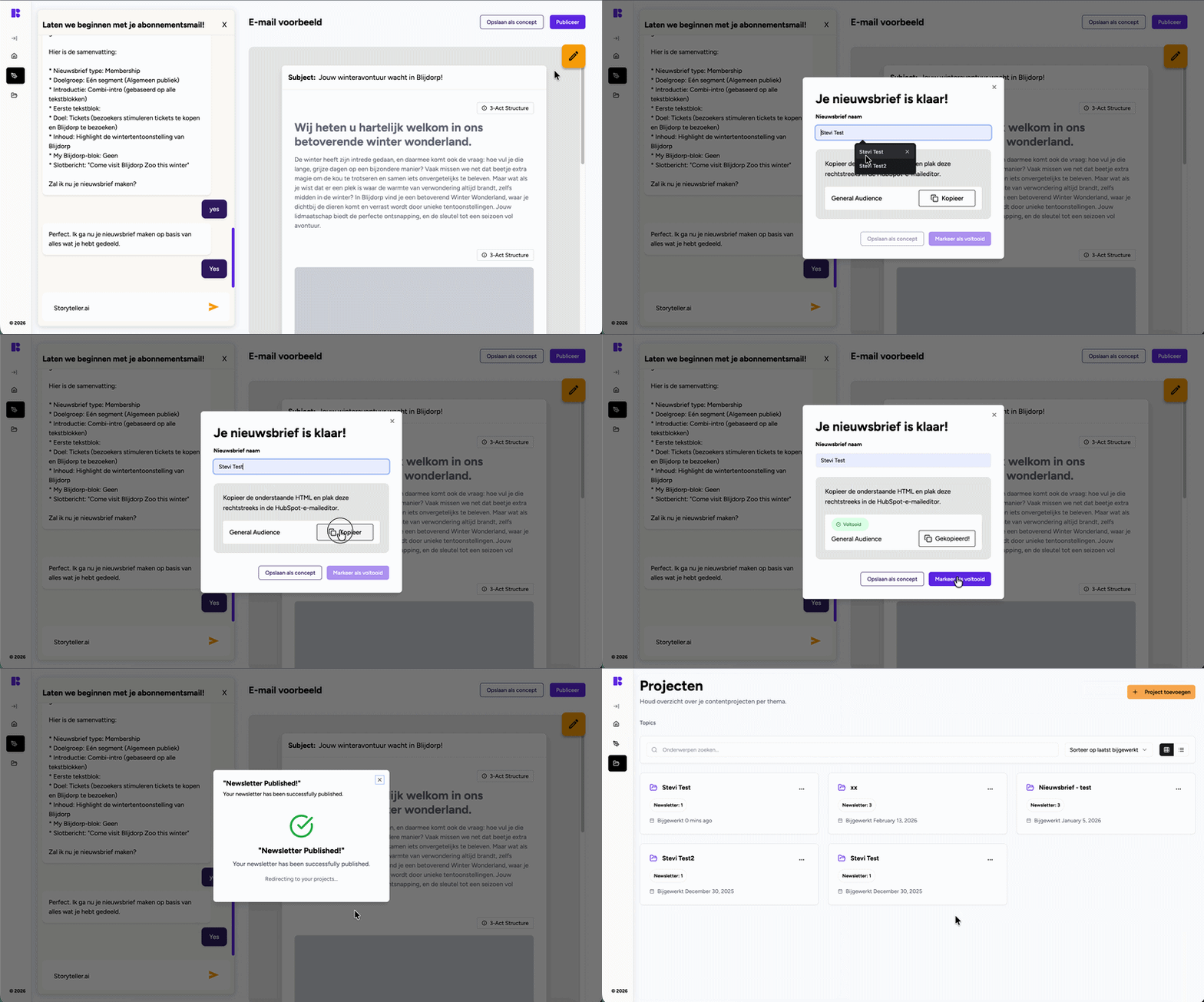
The client’s HubSpot environment didn't have an API ready for us, and it would take too long for us to release our MVP if we wanted to build this connection.
I designed a "copy-paste HTML" workflow so we could get our product to the market quickly. We optimised the AI to output perfectly formatted code that the team could drop into their existing HubSpot templates instantly. I prioritised Immediate time-to-value over technical perfection. We gave the team their hours back today while the developers built the API for tomorrow.
REFLECTION
This project could easily have become an AI that publishes for you. I made a deliberate choice not to build that. Every draft goes to a human before it goes live - not as a safety measure bolted on at the end, but as a core part of the experience design.
The result is a tool that's genuinely fast but still feels like the team's own voice. That balance of high-tech process and human judgment was the hardest thing to get right, and the thing I'm most proud of.
What’s Next?
Brand memory: a feedback loop that learns from human edits to stop repeating mistakes.
Omni-channel expansion: moving the context engine beyond newsletters into social media and web content.